










Extensive Newsletter Releases
On How to Study — Newsletter Insight
“The rational study of law is still to a large extent the study of history.” — Holmes (1897)
In the newsletter version of this article, we include historical context and study methods.
On The Existing World Government — Newsletter Feature
Most people do not know, remember, or factor in the following contract law and UCC concept. And it comes up all the time but usually I must remind people of it.
People are concerned and awakening to the sinister and malevolent agenda to create a “World Government”. And trust me, I’ve been following and am against that further consolidation of power by corrupt and evil people as well.
But, just so that you know, the actual fact of the matter is that we already have a world government — and it is Contract Law, and the Uniform Commercial Code. Every country in the world, every State or Province in those countries, all follow both of these.
So wouldn’t it be stupid to go through your whole life and not read at least the beginner’s level book on understanding both of them?
Wouldn’t it be your fault if you are not succeeding in life because there already is a world government and you fail to understand the rules (that apply to everybody all over the world) relating to the rules we are all expected to follow?

Our newsletter readers get exclusive breakdowns like this.
Court Rule of the Month
Here’s the classic video I’ve talked about for years, on how a Moor argues with a Judge over Jurisdiction, and the Judge tells him simply all he has to do is put in a Motion and Notice of Motion to get the court to rule on what he is saying.
He might have been right about the court needing to prove jurisdiction, but the Judge was giving him the way that the demand could be heard by the court. The court is a feminine animal — they only respond when you approach them the right way.
This newsletter article breaks it all down step-by-step.
Video: Moor vs. Judge on Jurisdiction — learn how to challenge jurisdiction properly.
Jurisdiction Tidbit of the Month
“Where there is no jurisdiction there is no judge; the proceeding is as nothing. Such has been the law from the days of the Marshalsea.” 10 Coke 68; also Bradley v. Fisher, 13 Wall 335,351. Manning v. Ketcham, 58 F.2d 948.
Immunity Lesson of the Month
“Officers of the court have no immunity, when violating a constitutional right, from liability, for they are deemed to know the law.” Owen v. City of Independence, 448 U.S. 1, 100 S. Ct. 2502 (8th circuit, 1980); Hafer v. Melo, 502 U.S.
Federal Question Lesson of the Month
Read Cooperative Federalism by Gerald Brown, Ed.D. One may find this document by simply doing an internet search for “Cooperative Federalism PDF”.
It’s 40 pages of juicy education and steeped with facts in regards to the States of the UNION being Separate, Distinct, and Foreign to the UNITED STATES. Every beginner of self-help law has a “first document” they’ve ever read/studied, and this is probably it for most of us.
Anytime federal or state courts argue that your court statements are based on “discredited sovereign citizen legal theories” — actually NO, they are based on U.S. Supreme Court opinions, as Cooperative Federalism will enlighten you and give all the citations for you to shoot back with.
Constitutional Lesson of the Month
Fifth Amendment vs. Fourteenth Amendment: The Fifth Amendment secures the due process rights against Federal officials, but not State officials. That reality was made apparent by the U.S. Civil War and subsequent abolition of involuntary servitude (without due process of law).
Some people ask me if one as an SPC who has obtained their right status, can also use the Fourteenth Amendment when up against State agents/actors. The answer is yes, you can use it, because the laws exist FOR YOU as the plaintiff to use.
These laws bind OFFENDERS of said statutes, which are restricting GOVERNMENT AGENTS, not private people. And the allegations are against THEM, not against you, so you are not submitting to any corporate jurisdiction.
If you resign and leave employment at Facebook, Inc., you need to still pursue a claim against a Facebook employee for sexual harassment or other mistreatment, and you can use their own internal bylaws first. If the internal bylaw administrative process does not result in remedy, then you can go to outside jurisdiction such as the outside Courts to sue.
In addition, the Fourteenth Amendment does NOT say: “nor shall any State deprive any U.S. Citizen of life, liberty, or property.”
Just read the text of it yourself:
“Section 1. No State shall make or enforce any law which shall abridge the privileges or immunities of citizens of the United States; nor shall any State deprive any person of life, liberty, or property, without due process of law; nor deny to any person within its jurisdiction the equal protection of the laws.”

Commercial Law / UCC Lesson of the Month
Some people discover the UCC and then are led to believe that they can send a “Bill of Exchange” to discharge a debt. While this is true in the traditional legal sense, you have to be precise in law with everything that you are doing.
I’ve seen people write terms and conditions into their bill of exchange such as “for a full acquittal and discharge of the attached court judgment, lien, credit card bill, etc.” But Tyler is here to tell you the TRUTH — putting those terms and conditions makes the instrument NO LONGER an “unconditional payment order”, as what you’ve stated here IS A CONDITION.
In order to be defined in law as a “bill of exchange”, the instrument must say “Pay on Demand” or have a date to be paid, must list specifically who the Payee is, must say who the drawer and drawee are, and be paying a specified sum of money. Vague or uncertain amounts would violate this requirement.
Bottom line — get your facts straight before just trying things out. If you want more info on the Bills of Exchange lesson, you can contact us. For those who have ever donated/supported us in the past, we can give you a free lesson on this topic.
Contract Law Lesson of the Month
It’s been said that “Consent makes the law” or “Consent makes ALL or EVERY Law”. That’s a profound and grand statement, and one so consequential that it should take a thinking mind several or many years to continually investigate and get to the bottom of.
Luckily, by supporting us, you can piggyback off of our full-time research for 15 years in this space. We’ll drip bite-sized bits of these lessons in each of our newsletters so that no matter how busy you are you can continue to work to comprehend better, and make more progress in “unlocking” the next layer.
The definition of “Consent” from Bouvier’s 6th edition: “Consent is either express or implied. Express, when it is given viva voce, or in writing; implied, when it is manifested by signs, actions, or facts, or by inaction or silence, which raise a presumption that the consent has been given.”
Take that in and integrate it for now. If you have questions, get a hold of the Contract Law Basics Beginner’s (CLBB) course, or ask to mentor with Tyler personally.
Credit Leveraging and Debt Cancellation Tip of the Month
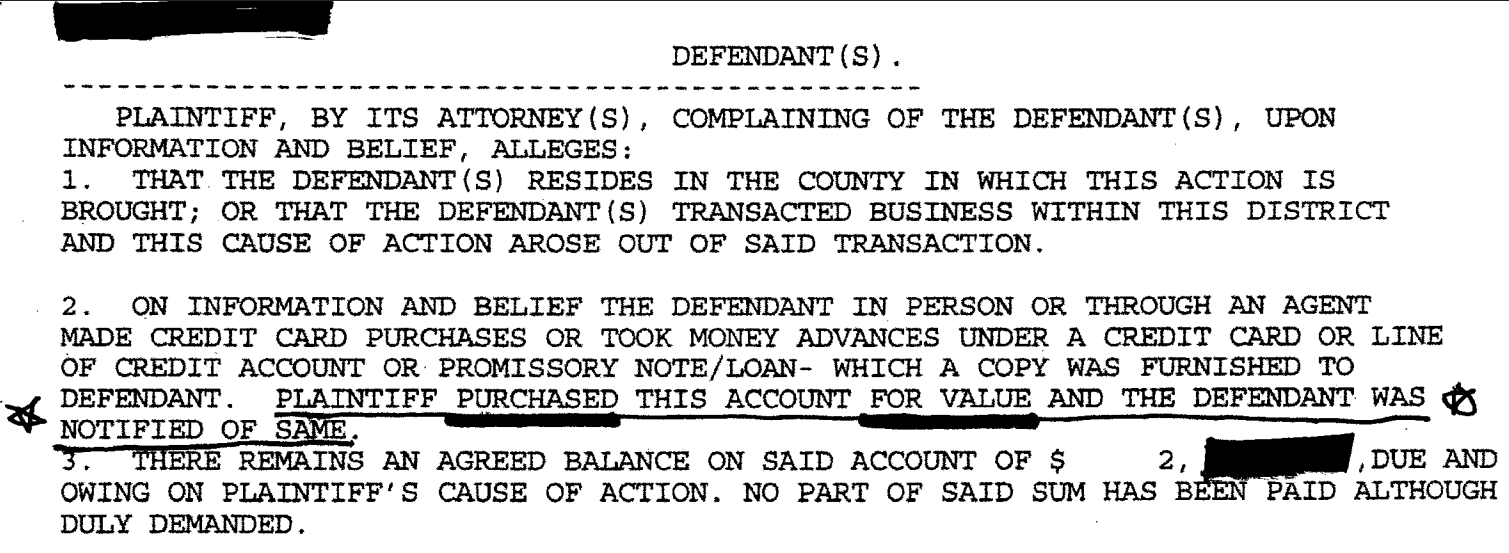
Once you’ve already made the decision to not pay the debt collectors — you need to know that you should not interact or engage with debt collectors as this is a form of acceptance. You are giving veracity to the debt and can totally screw any progress of any discharge process you have begun.
Even logging into a payment portal to see the status of the so-called account, can potentially be seen as re-memorializing the existence of and legal veracity of this so-called account.
Every time you visit a website, especially log into any special access section of any website, you are agreeing to terms and conditions. If you don’t know this already like the back of your hand, this might explain why you are failing in some of your contract law and debt elimination endeavors.
If that is you, maybe it’s time to stop doing processes and instead focus on learning to become a master at contract law first — so that any future process that you do will be done entirely correct and you will WIN.
Definition Lesson of the Month: Pro Persona
In pro persona: “in one’s own proper person” (Black’s Law Dictionary 1st edition). Meaning, not through any other alter-identity. Some definitions of “Pro Se” cover in pro persona, but others contradict pro persona — so it’s best to strictly address your status as “in pro persona” rather than “pro se”.
How to correctly use it in a courtroom setting (public or private) — one might wish to announce themselves when asked for your name, with this entire script (both orally and in writing):
My name is John-Henry of the Doe family, in pro persona, secured party and trustee to the corporate fiction of JOHN HENRY DOE; both names are copyright property of mine and record of all these unrebutted facts are on public record by the Secretary of State of (whatever state) and therefore stand as prima facie truth in any legal proceeding.
Stating this without a sufficient rebuttal with legal weight that contradicts these assertions, will make sure that you get on the court record of not only what “name” you are presenting/appearing under, but also the capacity and conditions of that presentation and appearance.
Equity Discussion of the Month
At the end of any presidential executive order, they mention “in law or in equity”. For example, on this February 10, 2025 executive order from President Trump, “Pausing Foreign Corrupt Practices Act Enforcement To Further American Economic and National Security”, it says:
“(c) This order is not intended and does not create any right or benefit, substantive or procedural, enforceable at law or in equity by any party against the United States, its departments, agencies, or entities, its officers, employees, or agents, or any other person.”
So what I’m training you to do here, is to NOTICE the words “law or in equity” as they commonly are paired together. Obviously equity is not covered under the word “law” so it is not law. So wouldn’t it be wise to really understand what it is?
Immunity Lesson of the Month
“Public officials are not immune from suit when they transcend their lawful authority by invading constitutional rights.” — American Federation of State, County and Municipal Employees, AFL-CIO vs. Woodward, 406 F2d 137.
Ineffective Processes Lesson of the Month
DO NOT ASK “HOW DO I FILE A LIEN ON SOMEBODY?” Instead, ask: “How do I get a court-ordered judgment against this somebody?” This is your safer bet. Obtaining a Judgment, or Settlement, will actually get you PAID. All Judgments ARE LIENS THEMSELVES, but generally the Court Case has to happen first.
Filing Liens on somebody without a court order recognizing or allowing it, will be deemed unlawful in their system, and will probably result in serious legal problems for you — i.e. they will put you in prison for a long period of time. It ain’t worth it!
The main exception to this rule is if the two parties meet and sign an agreement with “notice of lien” in the terms of the agreement, then, you might have a way to just go straight and place the lien outside of court, but you do so at your own risk. Make sure you are fully sure and fully know what you are doing.
This is available as part of the “Ineffective Processes” 70 page e-book ($650) giving you the full list of 85 Ineffective, False Hope and/or Dangerous and/or Fake processes, and in depth dissertations about 27 of them. We are here to educate, not indoctrinate. We are here to keep people out of prison, not put people into prison.

Jurisdiction Tidbit of the Month
Jurisdiction, once challenged, is to be proven, not by the Court, but by the party attempting to assert jurisdiction. The burden of proof of jurisdiction lies with the asserter. The Court is only to rule on the sufficiency of the proof tendered. See McNutt v. GMAC, 298 U.S. 178. The origins of this doctrine of law may be found in Maxfield’s Lessee v. Levy 4 U.S. 308.
Favorite Quote of the Month
Mark Twain: “The two most important days in your life are the day you are born and the day you find out why.”
Maxim of the Month
Animus moninis est anima scripti. The intention of the party is the soul of the instrument.
Paralegal Trivia of the Month
What is the difference between Holding and Dicta?
Personal Growth Lesson of the Month
“The further one goes, the less one knows.” — Lao Tzu
Prayer, Mantra, or Affirmation of the Month
“I love myself and I deserve to have it all.”
Knowledge Paradox — Aristotle
“The more we know, the more we know we don’t know.” — Aristotle
This statement by Aristotle, one of the most influential philosophers in history, highlights the endless journey of knowledge. It suggests that as we delve deeper into understanding, we uncover even more mysteries and uncertainties.
Court Rule Highlight of the Month
Rule 12: Defenses and Objections — When and How Presented; Motion for Judgment on the Pleadings; Consolidating Defenses (h) Waiver of Certain Defenses.
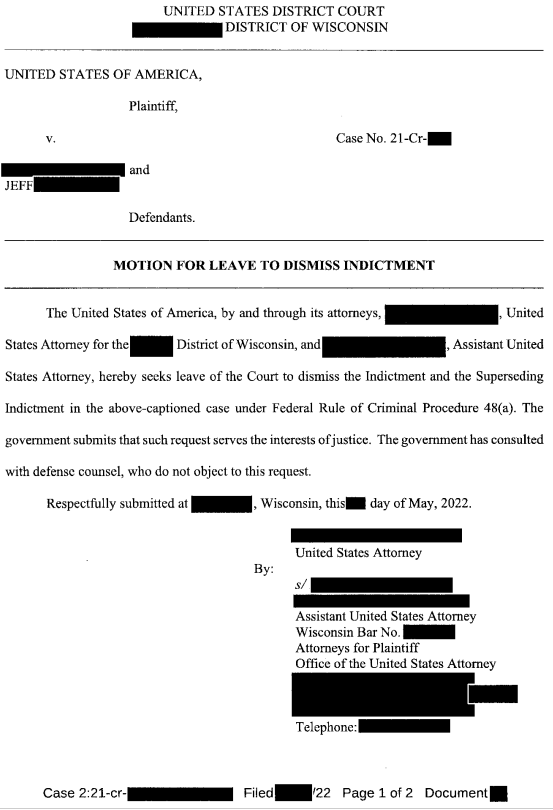
(3) If at any time before final judgment it appears that the court lacks subject-matter jurisdiction, the court must dismiss the action.
The court has an obligation to dismiss a case if it determines that it does not have the authority to hear the case based on subject matter jurisdiction. This rule is what you can reference if you are looking to move to dismiss a case based off of jurisdiction. The rules of court exist for us all to pull from and use at our disposals.
SCOTUS Case of the Month
Many of us missed this when it happened: SCOTUS Cell Phone Location Privacy case filed in 2017 — Carpenter v. United States, 582 U.S. (2017), decided 6/22/2018.
This case developed the holding that “The government’s acquisition of cell-site records is a Fourth Amendment search” and that “The Fourth Amendment protects not only property interests but certain expectations of privacy as well. Thus, when an individual seeks to preserve something as private, and his expectation of privacy is one that society is prepared to recognize as reasonable, official intrusion into that sphere generally qualifies as a search and requires a warrant supported by probable cause.”
Roberts, Chief Justice, delivered the opinion of the Court. Kennedy, Thomas, Alito, and Gorsuch filed dissenting opinions.
SPC (Secured Party Creditor) Lesson of the Month
The SPC approach is the bailment approach: A bailor is an individual who temporarily relinquishes possession but not ownership of a good or other property under a bailment agreement. The bailor entrusts possession of the goods or property to another individual, known as the bailee.
Your ALL CAPS Name is the bailor and the secured party is the bailee, of all property of the ALL CAPS name. Therefore, a valid legal theory exists to advance if you were ever held liable — records at the State (Secretary of State/UCC filing) show this bailment status between the two entities of your name, and that one is a real adult living man, and the other is just a corporate fiction like a corporation.
I cannot “become” a corporation, and I cannot “live” in a corporation — those are impossible. Your theory is that you shall not be held “in persona conjuncta” or automatic surety to any possession of any of your corporate fiction entity’s property. This explains why you hold onto the CORPORATE NAME’s drivers license, or similar documents.
This is great for protecting yourself in court against allegations that you are personally consenting to such “licensing” system, or by acceptance/possession of the mail at the U.S. corporate war-powers address, thus giving them personal jurisdiction over you the man or woman.
Statute of the Month to Study
“The appearance or semblance, without the substance of legal right — misuse of power, possessed by virtue of state law and made possible only because wrongdoer is clothed with authority of state, is action taken ‘under color of state law.'” — 42 U.S. Code § 1983 (the KKK Act)
After the Civil War, the federal government passed various acts, the Enforcement Acts of 1870 and 1871. These acts have evolved over time into the modern day Title 18 U.S. Code § 241 and 242.
Section 241 addresses conspiracy against rights; Section 242 makes it a federal crime for any person acting under color of law to willfully deprive a person of a right or privilege protected by the Constitution or laws of the United States.
Here’s a good list of related public cases that used the KKK Act: United States v. Price (1966), United States v. McGowan (1973), Doe v. Taylor Independent School District (1994), United States v. McGhee (1976), United States v. Hines (2000).
Trust Education of the Month
From Living Trust for Everyone (second edition) by Ronald Farrington Sharp (which I’ve been recommending for years), in the “Introduction” before Chapter 1, Sharp writes:
“When I was back in law school back in 1973, I took an introductory course on trusts and estates. Our class was visited by an old time lawyer who gave us what he considered practical and useful advice in starting out in the practice of law…”
Sharp describes how lawyers use wills as “loss leaders” — do them cheap, keep the original, get named as the estate attorney, and build a lucrative probate practice. He calls it a very sleazy tactic. The fact is that in most cases, probate is not necessary and is easily avoided. If proper planning is done, there should be no legal fees at all after a person’s death.
Personal Development — Understand Yourself and You Win
The Truth About Radically Transforming Yourself by Owen Cook.
Contract Law Lesson of the Month
“Acceptance is the offeree’s manifestation of assent to the offer. Intent to accept is determined objectively. The question is not whether the offeree actually intended to accept, but whether a reasonable person in the offeror’s position would have understood the manifestation as an acceptance. It is the event that brings the contract into existence.” — Brian Blum, Examples & Explanations for Contracts, Chapter 4.7.
Constitutional Sixth Amendment of the Month
In all criminal prosecutions, the accused shall enjoy the right to a speedy and public trial, by an impartial jury of the state and district wherein the crime shall have been committed, which district shall have been previously ascertained by law, and to be informed of the nature and cause of the accusation; to be confronted with the witnesses against him; to have compulsory process for obtaining witnesses in his favor, and to have the assistance of counsel for his defense.
The Sixth Amendment can be leveraged to one’s advantage by pushing for the nature and cause of the accusation. The courts are banks. This is a potential avenue to push one’s Constitutional rights to either win or negotiate a favorable settlement on terms you can live with.
Favorite Quote of the Month
“Every truth passes through three stages before it is recognized. In the first stage it is ridiculed, in the second stage it is opposed, in the third stage it is regarded as self-evident.” — Arthur Schopenhauer
Credit Tip of the month: People always generally say “keep your credit utilization ratio below 30%” — this is useful right before doing a transaction like financing, mortgaging, or leasing. But if you aren’t doing any of these things, then this advice does not apply. Don’t beat yourself up if your ratio is higher.
Movie of the Month
Documentary: Britney vs Spears (available on Netflix), released in 2021, tells the real tale of Britney Spears and the legal battle over the “conservatorship” that controlled every detail of her own life’s decision-making.
A conservatorship is similar to a guardianship which is paired with the term “ward” (guardian-ward relationship). Due to what seemed to be one medical doctor’s possible incorrect diagnosis, she was classified under a dementia diagnosis in order to enable all of her rights to be controlled by her appointed guardian or conservator.
Alas, in this documentary you will see how Britney Spear’s father obtained legal rights to make all decisions for his daughter — from where she can go, who she can associate with, what she can eat, which medications she must and mustn’t take, and of course total and complete control of her money.
From public pressure, the Judge on the case in California finally released Britney to her own sovereignty — but after the damage was done for two decades. Let’s all offer some prayers for Britney. The status that they put Britney under is very similar to the one that we are all also under whenever we are invited to show up in Court.
Secrets Hidden on FRNs of the Month
On the reverse side of your Social Security card is a letter and eight-digit number. This letter represents the Federal Reserve Bank branch (A thru L for the 13 branches) that prints money from the financing of your Birth Certificate and other Adhesion Contracts.
The eight-digit number is identical to one resident or citizen’s reverse side of one of his or her Social Security cards. This number is the account number tracking the Person’s BC being monetized through the Mortgaging and Collateralization event by the for-profit enterprise known as the UNITED STATES Corporation.
The first three numbers are the county of the birth, the next two or four digits are the year you were born, and the last six digits are your lifetime contractor/surety number with the U.S. Corporation. Now does it all make sense how we are born slaves?
Other Questions About Trusts in General
What is the difference between a “Simple” Trust and a “Complex” Trust?
A complex trust is one in which the board of trustees may have discretion to hold on to revenue and make decisions based on bylaws. In a simple trust, the trustees are required by bylaw to disperse the funds immediately to the beneficiaries.
Anyone who sets up any type of asset planning trust is usually going to choose a complex trust because there is a lot more discretion and tax avoidance by law. In a simple trust under U.S. jurisdiction, the beneficiaries are going to owe a potential tax consequence on the disbursements.
Statutes to Study and Follow
Uniform Fraudulent Transfers Act. This act has been enacted into each of all the STATE’s and basically says that any assets that changed hands into any other person — individual, business, or trust — may be able to be retroactively reverted back into the original seller’s estate and the sale or transfer vacated nunc pro tunc. Within a five-year timeframe from the date of the transfer or sale. This covers ANY/ALL property — deeds, intellectual property, investments, everything.

Success Tip of the Month
Invest in coaches and mentorship from people who know what they’re talking about. When you get a mentor, you’re tapping into their field of awareness — literally accessing their wealth of knowledge and connections without having to put in all the sweat equity, seminars, coaching, trips, networking events, and courses.
“From the errors of others, a wise man corrects his own.” — Publilius Syrus
Also know you can graduate from a coach; everyone has a right to evolve and seek new mentorship. Never feel confined to anyone.
U.S. Bankruptcy Proof of the Month
“Mr. Speaker, we are here now in chapter 11. Members of Congress are official trustees presiding over the greatest reorganization of any bankrupt entity in world history, the U.S. government.” — Congressman Traficant on the House floor, March 17, 1993
Best Rare Research Article of 2024 Award
The Nomenclature of Enslaved Africans as Real Property or Chattels Personal: Legal Fiction, Judicial Interpretation, Legislative Designation, or Was a Slave a Slave by Roy W. Copeland (Journal of Black Studies).
Journal of Black Studies: View on JSTOR.
© 2026 UCLAYW — Newsletter — Empowering truth-seekers through real legal education.
Thanks for reading our newsletter — stay tuned for the next issue coming soon.

EDU Courses & Lessons
If you’re looking to take advantage of the world’s best tools for sovereignty and freedom, you’ll want to engage with Tyler UCL as often as possible. You’ll gain real clarity on your next steps in just one hour of legal mentorship and life coaching, and you’ll develop a true ally who is not only a genius, but authentic, emotionally vulnerable, and genuinely wants your friendship. In life, we all learn that we cannot succeed alone.