Blockchain Passport: New Blockchain World Citizenship Passport
If bitcoin’s true believers ever found their tax-free libertarian utopia, Christopher Ellis could be in charge of the passport office.
Overview
Key Idea
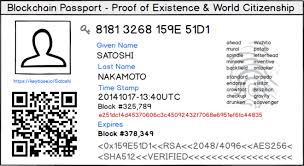
Ellis has built software that lets anyone create what he calls a “World Citizenship” passport.
How It Works
Using PGP encryption software and the bitcoin blockchain—a cryptographically secured public ledger that runs on machines across the internet—the project creates a mathematically iron-clad identification paper that would be extremely difficult, perhaps impossible, to fake.
Why Blockchain-Based Passports Matter
A blockchain passport introduces a fundamental shift in how identity can be issued, verified, and controlled. Unlike traditional passports that rely on centralized authorities and physical documents, a decentralized passport model places identity ownership directly in the hands of individuals.
By using cryptographic verification and public ledgers, identity records become tamper-resistant and independently verifiable. This reduces reliance on single institutions, lowers the risk of document fraud, and increases transparency across borders and systems.
Such a model also raises important questions about privacy, governance, and global interoperability. While blockchain technology offers strong verification, its adoption requires careful consideration of how identity data is stored, shared, and protected in a decentralized environment.
Blockchain Expands Beyond Currency
This is the next generation of bitcoin. It came of age as a digital currency, but developers are pushing the blockchain and blockchain-like technologies into whole new areas.
Examples of Blockchain Projects
| Last month, a project called Ethereum raised $15 million, promising to use a blockchain clone to provide distributed computing resources. |
| And Overstock.com announced a plan to use the blockchain for an online stock exchange. |
Key Takeaway
In the spirit of bitcoin, people, not nation-states, would issue identity credentials independently, challenging traditional models of citizenship and authority. READ MORE
Summary
-
1
If bitcoin’s true believers ever found their tax-free libertarian utopia, Christopher Ellis could be in charge of the passport office.
Ellis has built software that lets anyone create what he calls a “World Citizenship” passport.
-
2
Using PGP encryption software and the bitcoin blockchain—a cryptographically secured public ledger that runs on machines across the internet—the project creates a mathematically iron-clad identification paper that would be extremely difficult, perhaps impossible, to fake.
-
3
This is the next generation of bitcoin. It came of age as a digital currency, but developers are pushing the blockchain and blockchain-like technologies into whole new areas.
Last month, a project called Ethereum raised $15 million, promising to use a blockchain clone to provide distributed computing resources.
And Overstock.com announced a plan to use the blockchain for an online stock exchange.
Conclusion
Decentralization represents a broader philosophical and technological shift that extends beyond currency, finance, or identification systems.
In the context of a blockchain-based passport, decentralization challenges long-standing assumptions about who controls identity, how trust is established, and where authority originates.
Rather than relying exclusively on centralized institutions, decentralized identity systems introduce cryptographic proof, transparency, and individual ownership as foundational principles.
As blockchain technologies continue to mature, projects like the world citizenship passport serve as early experiments in rethinking governance, mobility, and digital rights in a globalized world.
While these systems are not replacements for existing legal frameworks, they offer insight into how future identity models may evolve alongside technological innovation.

If you are interested in reclaiming your sovereignty and freedom, take the time to learn and study. There’s a wide web of information. Get your head on straight. We highly recommend you start your study by reviewing our FREE De-programming Video series. It contains over 24 hours of free detailed video and audio material that you can absorb in this never-ending path for the correct information: click here to Get Access .