
Presumptions Require Rebuttal Explained: How Legal Presumptions Are Overcome
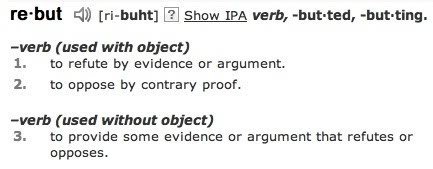
Presumptions unless rebutted stand as fact. For instance, we are presumed to be a U.S. Citizen and governed by the corporate bylaws of US Inc. unless and until we claim and act otherwise and destroy the presumption.
Think affidavit of negative averment, conditional acceptance upon proof of their claim sworn to under penalty of perjury that you are what they presume you are.
Whatever the presumptions, it is up to us by our actions, words, and deeds to rebut falsehoods of the mind, also known as assumptions.
This is the world of fiction. Assume means to pretend, to engage, to put on deceitfully, take appearance of, or become bound as another is bound.
There is nothing factual about a presumption once one claims and acts otherwise and shifts the burden of proof.
Presumptions Require Rebuttal Explained: Legal Dictionary Definitions (Black’s Law Dictionary, Sixth Edition)
Presumption. An inference in favor of a particular fact. A presumption is a rule of law, statutory or judicial, by which finding of a basic fact gives rise to the existence of a presumed fact, until the presumption is rebutted.
A legal device which operates in the absence of other proof to require that certain inferences be drawn from the available evidence.
Rebuttable presumption. A presumption that can be overturned upon the showing of sufficient proof.
Once evidence tending to rebut the presumption is introduced, the force of the presumption is entirely dissipated and the party with the burden of proof must come forward with evidence to avoid a directed verdict.
Presumptive. Resting on presumptions; created by or arising out of presumption; inferred; assumed; supposed.
As in presumptive damages, evidence, heir, notice, or title.
Presumptions in Civil Actions (New York)
1. Operation of a Presumption
A presumption in New York operates like presumptions elsewhere in its creation. However, when a party seeks to overcome a presumption, no single principle applies to all New York presumptions.
A. The Thayer Approach
Under the Thayer rule, a presumption disappears whenever some evidence is introduced which, viewed alone, tends to disprove the existence of the presumed fact.
This is a question for the judge. If it is overcome, the jury does not know about it. They decide the case, if there remains a question of fact, as they would if there were no presumption.
A Thayer presumption places the burden of production on the opponent but does not affect the burden of persuasion, which remains with the proponent.
B. The Morgan Approach
Under the Morgan rule, a presumption remains in the case and is sent to the jury.
The jury is told to find for the party holding the presumption unless they determine that the opponent has disproved the presumption by the greater weight of all the evidence.
This approach assigns both the burden of persuasion and the burden of production to the opponent.
C. The Pennsylvania Compromise
A minority view sends the presumption to the jury but allows the jury to determine whether it has been overcome, while the burden of persuasion remains with the holder of the presumption.
2. Basic New York Approach – Thayer Plus
Most presumptions remain in the case only until the judge finds that the opponent has overcome the presumption with some substantial evidence.
This requires more than the “some evidence” standard in pure Thayer jurisdictions. The evidence must, when viewed alone, disprove the nonexistence of the presumed fact.
3. Unique Presumptions
Five presumptions require more or less evidence to overcome them than does the basic presumption.
4. Conflicting Presumptions
When presumptions conflict, the stronger presumption prevails. Determination of strength is a question of law for the judge.
If presumptions are of equal weight, they are disregarded.
5. Presumptions in Criminal Cases
There is no difference between presumptions favoring the prosecution in New York criminal cases and the rules protecting defendants under the Federal Constitution.
6. Specific Presumptions
Numerous presumptions are recognized in New York law. Any of the standard New York evidence law texts discuss these presumptions in detail.

If you are interested in reclaiming your sovereignty and freedom, take the time to learn and study. There’s a wide web of information. Get your head on straight. We highly recommend you start your study by reviewing our FREE De-programming Video series. It contains over 24 hours of free detailed video and audio material that you can absorb in this never-ending path for the correct information: click here to Get Access .